Ocean Sniper
- 4.2
- Rating
- 1.00M
- Installs
- Free
- Price
 Analysis by App-foxy
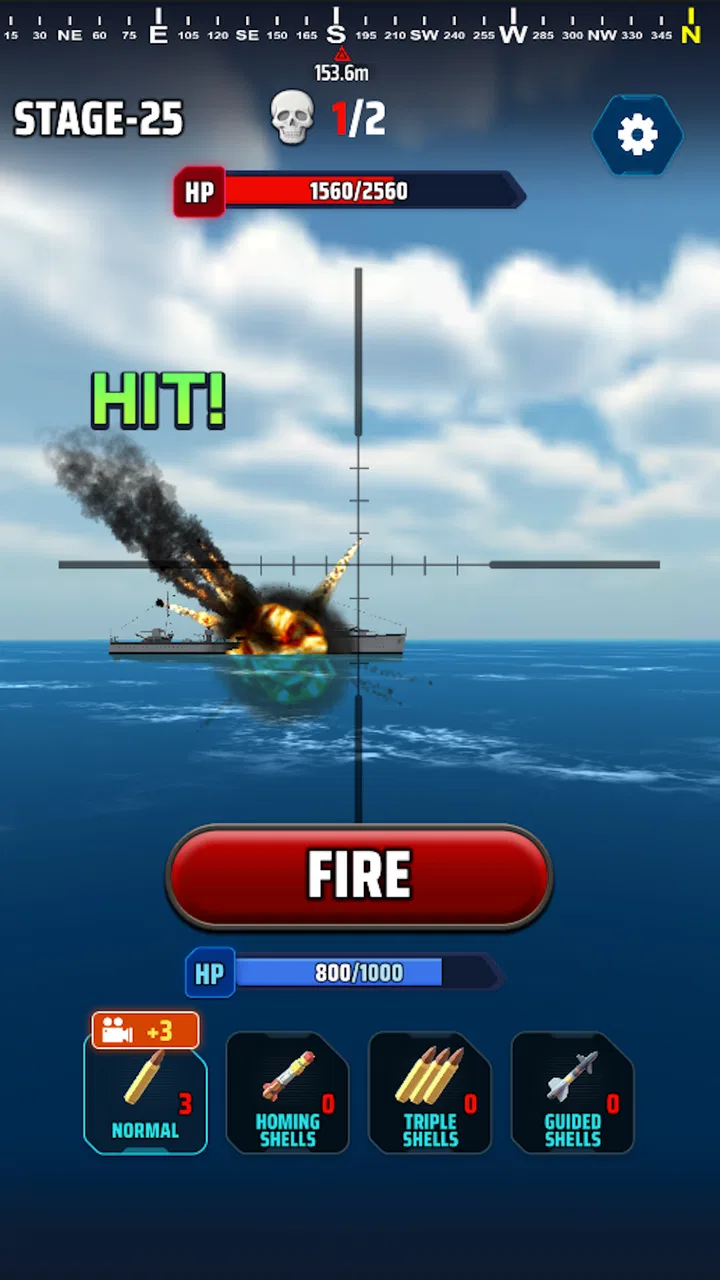
Ocean Sniper is a free naval simulation game from HIPAHIPA Games that puts me in charge of a fleet while enemy warships move into range. Its appeal is easy to understand: it turns a short mobile session into a compact exercise in aiming, timing, and choosing which threat deserves attention first. I found it most enjoyable when I treated each encounter as a small tactical problem rather than simply tapping as quickly as possible.
The game is listed for Everyone 10+ and runs on Android devices using version 6.0 or later. It reached version 3.3, and its audience has grown beyond 500 thousand installs. Those figures suggest a reasonably established casual player base, although the average score of 3.6 from roughly 666 ratings shows that the experience is not universally loved. That feels fair to me: the core idea is immediately accessible, but players looking for a deep fleet-management simulator may find the action-focused design narrower than expected.
How the naval decisions actually feel
The first useful decision is not merely where to shoot. It is how to read the whole field before committing to an attack. When several enemy ships are present, the tempting move is to target the closest or most obvious vessel. I had better results when I paused for a moment, identified the ship that could create the most immediate pressure, and then considered whether a quick hit or a more deliberate shot made sense.
You May Also Like

 Blood Strike: 2.5 Anniversary
Blood Strike’s Loadouts Turn Every Drop Into a Tactical Gamble
A close look at Blood Strike’s custom loadouts: how fast access to signature weapons reshapes its battle royale rhythm, rewards preparation, and narrows the gap between fights.

 Pandora - Music & Podcasts
Pandora’s Music Is Easy to Start, but Harder to Recover
Pandora’s strength is its low-effort path from a seed to a station. Its weak spot is how much confidence it asks you to place in connection, setup, and quiet recovery.

 8 Ball Pool
 Is Built on Rivalries, Rematches, and Routine
A close look at the rivalries, rematches, shared routines, and unanswered safety questions that turn a quick pool match into a persistent mobile community.

 Samsung Music
’s Quiet Strength Is Playing What You Already Own
Its reach comes less from spectacle than from dependable access to a personal library. That simplicity is both the app’s strongest retention engine and its ceiling.

 AccuWeather: Weather Radar
AccuWeather Review: A Quick, Clear Forecast for Everyday Decisions
For everyday plans, the best forecast is the one you can understand quickly. AccuWeather makes rain timing, radar, and local conditions easy to act on, with a few trade-offs.

 Hill Climb Racing
Why Hill Climb Racing Still Turns Crashes Into One More Run
A tiny car, a bumpy hill and one more upgrade: Hill Climb Racing keeps resurfacing because its simple chaos makes every near-miss feel personal.
More From Our News Desk



That small pause changes the rhythm. Ocean Sniper works best when I alternate between observation and action. Firing continuously may feel energetic, but it can also make the player react to whatever is directly under the finger instead of managing the encounter. The game becomes more satisfying when I think in terms of a firing order: remove the danger that limits my options, then use the extra breathing room to handle the remaining targets.
This is also where the game separates itself from a completely mindless arcade shooter. The store’s short description calls it “Ocean Sniper,” and that label accurately points toward focused shooting rather than a broad military-management experience. I am not spending a long session designing an entire navy, negotiating alliances, or managing supply chains. The decision space is smaller, but it is concentrated around what to do with the next shot and how much attention to give the changing battlefield.
For a player using a phone during a commute or waiting for an appointment, that compact structure is a strength. I can understand the immediate objective quickly and start making decisions without learning a large collection of systems. On a tablet, the larger display can make it easier to separate targets and keep track of the action, while a smaller phone screen demands more careful finger placement. That difference matters when several ships compete for attention.
One practical habit helped me avoid careless play: I did not fire the moment a target appeared. I first checked whether another enemy was creating a more urgent problem and whether a shot would leave me poorly positioned for the next exchange. This is not a complicated strategy, but it is the kind of discipline that produces more consistent sessions. The game rewards awareness more than frantic movement.
Choosing targets instead of chasing spectacle
The most useful way to approach each encounter is to rank threats rather than enemies by appearance. A ship that looks dramatic is not automatically the best first target. If another vessel is closer to causing trouble, ignoring it for a more attractive shot can turn a promising run into a rushed recovery.
I also found that target selection should account for follow-up time. A shot that removes one ship but leaves the rest of the field unmanaged may be less valuable than a safer attack that keeps several options open. That is a meaningful trade-off for a mobile game: immediate progress feels good, but preserving control over the next few seconds can matter more than taking the fastest visible opportunity.
This makes Ocean Sniper a better fit for people who enjoy light tactical planning than for players who only want instant explosions. The action remains approachable, yet the better results come from thinking one or two decisions ahead. I would not describe it as a full strategy simulation, but it has enough prioritization to make repeated attempts more engaging than a simple target-practice app.
Risk, reward, and the cost of rushing
The game’s risk-and-reward tension comes from deciding how aggressively to act. A cautious player may spend too long analyzing the scene, while an impatient player may waste opportunities by shooting without a plan. I preferred a middle path: make a quick assessment, commit to a target, and then reassess immediately instead of following a fixed script.
That approach is especially useful when an early attack does not produce the expected result. Rather than continuing to press the same plan, I treated the next moment as a reset. The important question became, “What has changed?” A target may now be more urgent, my available space may be reduced, or the remaining ships may be easier to handle in a different order. This keeps a mistake from becoming a chain of automatic mistakes.
There is also a psychological risk in focusing too heavily on one target. Concentration feels productive, but it can narrow attention so much that another enemy becomes the real problem. I learned to use short visual checks between attacks. I would confirm the main target, scan the rest of the field, and only then continue. That extra glance is a small technique, but it prevents the kind of tunnel vision that makes a run feel unfair when the real cause was poor prioritization.
For everyday play, I would use this game in short bursts rather than treating it like a long-form campaign. A five-minute session can be satisfying when I want a quick challenge, while longer play may expose the limited breadth of the format. If I were looking for a game to occupy an entire evening, I would choose a larger naval strategy title with more systems and longer-term planning. Ocean Sniper is more comfortable as a focused tactical break.
The free price removes the biggest barrier to trying it. That makes the game easy to recommend to someone who wants to test a naval shooter without committing money first. Still, free does not automatically mean ideal for every player. Someone sensitive to repetition should pay attention to how quickly the central shooting loop begins to feel familiar. The value here depends on whether refining decisions is enjoyable in its own right.
A realistic short-session example
Imagine I am waiting for a train with only a few minutes available. I open the game, scan the water, and immediately notice that one enemy is convenient to target while another appears more urgent. Instead of taking the easy shot, I deal with the larger immediate risk, then reassess before firing again. If the first decision works, I have created a calmer field; if it fails, I still know what changed and can adapt instead of tapping randomly.
That scenario captures the game’s strongest use case. It does not require a long setup, a quiet room, or a large block of free time. The trade-off is that the same convenience can make the experience feel lightweight to serious simulation fans. I would recommend it for quick concentration practice and casual naval action, not as a substitute for a detailed command game.
Adapting when the first plan stops working
Repeated play is most rewarding when I stop judging a session only by its outcome and start examining the decision that led there. Did I choose a target because it was genuinely dangerous, or because it was easiest to hit? Did I react to the battlefield, or did I keep following an opening plan after the situation had changed? These questions give the game more depth than its straightforward presentation initially suggests.
One of my favorite adjustments is changing the order of attention. In one attempt, I may focus on eliminating the nearest threat. In another, I may choose a target that is slightly less immediate but easier to remove cleanly, reducing the number of distractions on screen. Neither approach is always correct. The useful lesson is to match the plan to the current arrangement rather than assuming one universal sequence.
Another tip is to avoid treating every shot as an isolated event. I tried to think about the next decision before making the current one. If a shot would leave me with several equally urgent targets, I considered whether another option would simplify the following moment. This kind of two-step planning is a concrete way to improve without needing complicated controls or a detailed upgrade spreadsheet.
Players should also adjust their expectations based on the control environment. On a phone, I found that deliberate touches are more reliable than rapid swipes or repeated corrections. A larger screen gives more room to identify targets, but it can also encourage overconfidence because the field feels easier to read. On either device, the best adaptation is to use the display you have rather than forcing a play style designed for another screen size.
The game is not the right choice for someone who dislikes retrying a similar encounter in search of a better result. Its appeal comes from refining execution and judgment, not from constantly discovering a new genre system. If I wanted character progression, story missions, or a large collection of naval units to customize, I would look elsewhere. HIPAHIPA Games has kept the focus on command and shooting, and that focus is both the identity and the limitation of the experience.
What to expect from the learning curve
The learning curve is gentle at the controls but more interesting in decision quality. I could understand how to play quickly, yet playing more intelligently took longer. That is a good balance for casual users because the game does not make basic participation feel like homework. At the same time, it gives attentive players a reason to reconsider their habits after an unsuccessful run.
I would not expect the game to teach advanced naval tactics in the real-world sense. Its “simulation” category is best understood as a game built around commanding a fleet in an accessible combat scenario, not as a technical naval training tool. That distinction matters for buyers. The experience offers simplified tactical choices and shooting pressure, while a specialist simulator would demand far more detailed systems and patience.
The average rating of 3.6 reflects that middle ground. Some players will appreciate the directness, while others may want more variety or a stronger sense of progression. I think the rating is a useful signal to keep expectations realistic: this is an approachable free game with a focused loop, not an expansive naval sandbox.
How much depth remains over time
Ocean Sniper has enough decision-making to support repeated short sessions, particularly if I enjoy improving target priority and timing. Its long-term appeal depends less on collecting a large set of features and more on whether I find satisfaction in becoming calmer and more accurate under pressure. That is a legitimate kind of depth, but it is narrower than the depth offered by fleet-building games.
The current version is 3.3, which tells me the game has continued to receive version updates rather than remaining at its earliest release state. It was released on September 24, 2025, so the project is relatively recent in its published life. I would still evaluate it on the loop available today: the important question is whether the basic naval encounters remain enjoyable after the first few sessions.
For me, the answer is yes, with conditions. I can return when I want a compact test of attention, especially if I set a personal goal such as making fewer impulsive shots or improving my opening scan. Those self-imposed goals create extra structure. Without them, the repetition may become noticeable sooner for players who need constant new content.
The game is also a reasonable choice for younger players within its Everyone 10+ rating, provided the family is comfortable with straightforward naval combat. The controls and premise are easier to approach than a complicated strategy title, but the pressure of choosing targets still gives the player something to think about. Adults who want a casual game they can explain quickly to a friend may find that balance appealing.
On the other hand, I would skip it if my priority were a persistent fleet, deep resource management, historical accuracy, or multiplayer competition. None of those expectations fit the compact shooting-centered identity that makes this game accessible. A broader naval strategy alternative would be better for long planning horizons, while a pure arcade shooter might be better for someone who wants speed without pausing to rank threats.
That comparison helped me place the game correctly. It sits between tap-focused arcade action and heavier naval simulation. It asks for more thought than a basic reflex game, but far less commitment than a full command-and-management title. The result is approachable and easy to revisit, though players seeking a large strategic ecosystem may outgrow it.
Who will get the most from it
I would recommend Ocean Sniper to players who enjoy short tactical challenges, naval themes, and the feeling of improving through better choices. It is particularly suitable for someone who wants a free game that can be understood quickly but still punishes careless attention. The most committed players will be those who enjoy reviewing why a run went wrong and changing their target order next time.
I would be more cautious recommending it to players who need a campaign with a strong narrative, extensive customization, or a constantly expanding set of activities. The game’s strength is concentration, not breadth. It is also not ideal for anyone who finds repeated combat encounters boring once the basic pattern is familiar.
Before installing, I would ask myself one simple question: do I enjoy making small tactical improvements, or do I mainly want a new spectacle every few minutes? If the first answer is yes, the game’s focused design can work well. If the second answer is yes, a more content-heavy alternative will probably provide better long-term satisfaction.
My strategy verdict after playing
My overall view is positive but measured. Ocean Sniper succeeds when it keeps me focused on the next meaningful choice: which enemy matters most, whether to take a safe opportunity, and how to respond when the battlefield no longer matches my original plan. It does not need a complicated interface to create that tension, and the free price makes experimenting with it straightforward.
The key is to play it as a decision game with shooting, not as a shooting game with no consequences. I recommend scanning before firing, ranking threats instead of choosing the easiest target, and reassessing after every important action. Those habits reveal the most satisfying part of the design and help reduce the frustration caused by rushed play.
At the same time, I would not oversell its scope. The category label may attract fans of large-scale simulation, but this is a streamlined mobile experience. Its depth comes from planning a few moves ahead and adapting under pressure, not from managing every aspect of a navy. That makes it a poor replacement for a detailed fleet simulator, yet a good companion for short breaks.
With over 500 thousand installs, HIPAHIPA Games has clearly found an audience for this kind of accessible naval action. The 3.6 average also reminds me that its focused loop will not suit everyone. My recommendation is therefore specific: try it if you want quick, free naval encounters where attention and target order matter. Skip it if you need expansive progression, story, or a large strategic command layer.
Ocean Sniper is at its best when I slow down just enough to make each shot part of a plan. That balance between immediate action and modest tactical thinking gives it a clear place among mobile simulation games. It is not an all-purpose naval experience, but for a short session in which I want to test my judgment, it earns a place on my phone.
FAQs for Ocean Sniper
01What is Ocean Sniper, and what can I expect from the gameplay?
Ocean Sniper is an engaging mobile game where players take on the role of a skilled underwater sniper. The game involves completing various missions that require precision and strategy as you target different sea creatures in a beautiful oceanic setting. Expect stunning graphics, challenging levels, and a variety of weapons to upgrade throughout your journey.
02Is Ocean Sniper free to play, or are there in-app purchases?
Ocean Sniper is free to download and play, but it includes optional in-app purchases. These purchases allow players to enhance their gameplay experience by acquiring special weapons, additional missions, or cosmetic upgrades. However, all missions and levels can be completed without spending money, ensuring a balanced experience for all players.
03What are the system requirements for installing Ocean Sniper on my device?
To install Ocean Sniper, your device needs to meet certain system requirements. For Android users, a device running Android 5.0 or higher is recommended, while iOS users should have iOS 10.0 or later. Additionally, ensure you have at least 100 MB of free storage space for a smooth installation and gameplay experience.
04Does Ocean Sniper require an internet connection to play?
Ocean Sniper can be played offline, allowing players to enjoy the game without a constant internet connection. However, certain features like leaderboards, daily challenges, and in-app purchases require an internet connection to function. Playing online also ensures you receive the latest updates and features as they become available.
05How does Ocean Sniper handle player data and privacy?
Ocean Sniper takes player privacy seriously. The app collects minimal data necessary for gameplay and ensures it is securely stored and managed. The game complies with international data protection regulations, and players can review the privacy policy within the app settings to understand how their data is used. Always ensure you download the app from official sources to protect your information.
Pros
- Realistic ocean environments enhance gameplay.
- Wide variety of marine life to target.
- Intuitive controls make it easy to play.
- Regular updates with new challenges.
- Offline mode available for on-the-go play.
Cons
- Limited weapon upgrades without in-app purchases.
- Repetitive missions can become monotonous.
- Advertisements can interrupt gameplay.
- Requires a stable internet for best experience.
- No multiplayer mode for competitive play.

Ocean Sniper
Gallery